









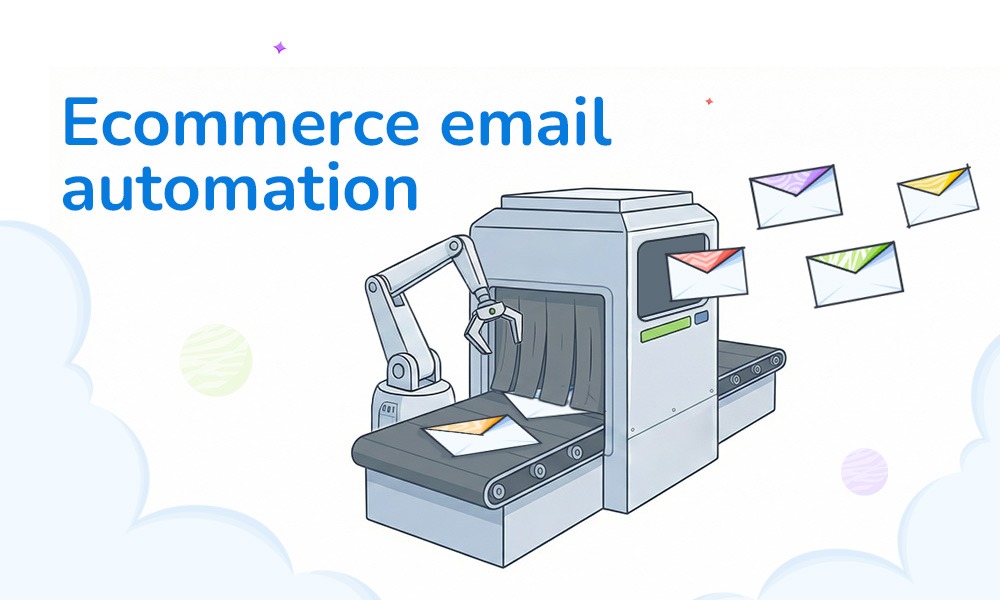
Most online shoppers don’t buy on the first visit; they browse, abandon their carts, and move on; ecommerce email automation is what brings them back. By sending targeted, behavior-triggered emails at precisely the right moment, brands can recover lost sales, welcome new subscribers, reward loyal customers, and re-engage dormant ones, all without manual effort after the initial setup.
The appeal is simple: automation runs 24/7, scales effortlessly, and converts far better than generic broadcast campaigns because it’s built around what a customer actually did. Whether it’s a cart abandonment sequence, a post-purchase upsell, or a winback campaign, the right automated email hits people when they’re most receptive, and that timing is everything.
table of contents
- What is ecommerce email automation?
- Benefits of ecommcerce email automation
- Ecommerce email automation flows and examples
- Ecommerce email automation best practices
- Ecommerce email automation strategies
- FAQs
- Conclusion
What is ecommerce email automation marketing?
Ecommerce email automation, meaning, the practice of sending pre-built, behavior-triggered emails to customers automatically based on actions they take in your store.
Instead of manually reaching out, you set up workflows once, and the system handles the rest, sending welcome sequences, cart abandonment reminders, post-purchase follow-ups, and winback campaigns without any ongoing effort.
What makes it powerful is the combination of timing, relevance, and scale. Automated emails reach customers at the exact moment they’re most engaged, with messaging tailored to what they actually did, which is why they consistently outperform standard broadcast campaigns in open rates, clicks, and revenue. It’s essentially a 24/7 sales and retention engine running in the background of your store.
Benefits of ecommerce email automation to drive growth
Ecommerce email automation removes the guesswork from customer communication by delivering the right message at the right moment, which directly translates into revenue. Here are the key benefits that drive growth.
1Revenue & conversions
- Recovers lost sales through abandoned cart and browse abandonment sequences
- Increases average order value with timely upsell and cross-sell emails
- Converts new subscribers faster with structured welcome flows
- Drives repeat purchases through post-purchase follow-up campaigns
2Customer retention
- Reduces churn while re-engaging dormant customers with winback campaigns
- Builds loyalty through personalized emails on rewards and achievements
- Strengthens relationships with relevant, behavior-based communication
- Turns one-time buyers into long-term repeat customers
3Efficiency & scale
- Runs seamlessly without manual effort after initial setup
- Scales efficiently as your customer base grows
- Frees up marketing time to focus on strategy over execution
- Delivers consistent messaging across every stage of the customer journey
4Data & personalization
- Segments customers automatically based on behavior and purchase history
- Improves over time through A/B testing and performance data
- Delivers personalized experiences at scale without added complexity
- Provides clear ROI tracking tied directly to email-driven revenue
The compounding effect is what makes automation so valuable and each flow you build keeps working in the background, stacking results month after month without additional investment.
Ecommerce email automation flows and examples
Ecommerce email automation spans the entire customer journey, from the moment someone discovers your brand to long after their first purchase. Here are the core automation and email marketing flows, along with what they look like in practice.
1Welcome series
Welcome email series are the first impression after someone subscribes. Typically, a 3–5 email sequence that introduces your brand, highlights bestsellers, and often includes a first-purchase discount to drive conversion.
Example: “Welcome to MailBluster — here’s 10% off your first order”
2Abandoned cart
Abandoned cart emails are one of the crucial points in email marketing. Abandoned cart triggers when a shopper adds items to their cart but doesn’t complete checkout. It provides the highest-ROI flows in email marketing.
Example: “You left something behind — your cart is about to expire.”
3Browse abandonment
Want to send an email when a visitor browses a product page? The browse abandonment email is sent when a visitor views a product page but doesn’t add anything to their cart. A softer approach than cart abandonment.
Example: “Still thinking about MailBluster? Here’s what other customers are saying.”
4Post-Purchase flow
Sending post-purchase emails is a beneficial approach for email marketing. A post-purchase email is sent after a completed order to confirm the purchase, set delivery expectations, request a review, and recommend complementary products.
Example: “Your order is on its way — customers who bought this also loved…”
5Winback campaign
Want to target purchased customers? Target customers are the customers who haven’t purchased in a defined period — typically 60, 90, or 120 days — with an incentive to return. This email promotion lets you winback customers while turning them into regular buyers.
Example: “We miss you — here’s 15% off to come back”
6Replenishment reminder
Want to send a customer a reminder about their product? It’s ideal for consumable products. This type of email is sent when a customer is likely running low, based on their purchase date.
Example: “Time to restock your product — order before you run out”
7Loyalty & VIP emails
Do you have specific customers and trusted, regular buyers? This type of email rewards high-value customers with early access, exclusive discounts, or milestone recognition to deepen retention.
Example: “You’ve reached VIP status — unlock your exclusive member perks”
8Back-in-Stock & price drop alerts
Want to send specific notifications about price drops or available products? This type of email triggers when a product a customer showed interest in becomes available again or drops in price.
Example: “Good news — Adidas shoes are back in stock. Grab it before it sells out again.”
Together, these flows cover every stage of the customer lifecycle, ensuring no opportunity to convert, retain, or re-engage is left on the table.
Ecommerce email automation best practices
Are you ready to start sending ecommerce email? Ecommerce email automation works best when it’s strategic, not just set-and-forget. Best practices on email automation for ecommerce assist you in getting a more enhanced email marketing experience. Here are the best practices that separate high-performing flows from generic ones:
1Timing & triggers
- Send abandoned cart emails within 1–3 hours while intent is still warm, then follow up at 24 and 72 hours
- Space welcome series emails 1–3 days apart to avoid overwhelming new subscribers
- Trigger winback campaigns based on your average purchase cycle, not arbitrary timeframes
- Test send times — automation doesn’t mean ignoring when people actually open emails
2Personalization & relevance
- Use dynamic content to show the exact products customers viewed or left behind
- Segment flows by customer behavior, purchase history, and engagement level
- Address customers by name and reference specific actions they took
- Tailor messaging based on where they are in the customer journey — a first-time buyer needs a different language than a loyal repeat customer
3Content & messaging
- Lead with value, not desperation — avoid LAST CHANCE unless it’s genuinely true
- Keep subject lines clear and benefit-driven, not clever for the sake of it
- Use social proof (reviews, testimonials, bestseller tags) to reduce purchase friction
- Include clear calls-to-action — don’t make people guess what to do next
4Design & deliverability
- Optimize for mobile — about 60% of emails are opened on phones
- Keep designs clean and fast-loading; avoid image-heavy emails that trigger spam filters
- Use a recognizable sender name and maintain consistent branding across all flows
- Regularly clean your email list to remove inactive subscribers and protect sender reputation
5Testing & optimization
- Operate A/B testing on subject lines, send times, discount amounts, and CTA placement
- Observe key metrics: open rate, click rate, conversion rate, and revenue per email
- Review flows quarterly — customer behavior and product catalogs change
- Don’t over-automate — if a flow consistently underperforms, pause it rather than annoy customers
6Compliance & respect
- Make it easy to unsubscribe: hidden or complicated opt-outs hurt deliverability
- Honor preferences: if someone opts out of promotional emails, don’t sneak them into transactional flows
- Email regulations: Follow email regulations like GDPR, CAN-SPAM, and regional regulations compliance to protect your brand and inbox placement
- Avoid over-mailing: more emails don’t always mean more revenue, and fatigue kills engagement
The best automation feels human, not robotic. It anticipates needs, respects boundaries, and adds value at every touchpoint — which is exactly what keeps customers engaged and buying.
10 Best ecommerce email automation strategies
Strategies on ecommerce email marketing services let you find the right way to segment, analyze, and optimize the campaign for ecommerce automation. Let’s explore the top ecommerce automation strategies in the following.
1Build a multi-touchpoint welcome series
Don’t waste your welcome email on a generic thanks for subscribing. Use a 3–5 email sequence to introduce your brand story, showcase bestsellers, share social proof, and offer a first-purchase incentive. This is your highest-engagement window — use it to convert subscribers into customers fast.
2Layer your abandonment flows
Go beyond basic cart abandonment. Build separate flows for browse abandonment (viewed but didn’t add to cart), checkout abandonment (started checkout but didn’t finish), and post-purchase abandonment (bought once, never returned). Each requires different messaging and urgency levels.
3Segment by customer lifecycle stage
Treat first-time buyers, repeat customers, and VIPs differently. New customers need education and reassurance. Repeat buyers respond to loyalty rewards and exclusive access. VIPs deserve personalized recommendations and early product drops. One-size-fits-all automation leaves money on the table.
4Use predictive replenishment for consumables
If you sell products that run out such as skincare, supplements, pet food, coffee and more, set up replenishment emails based on expected usage cycles. Send a reminder 5–7 days before they’re likely to run out, with a frictionless reorder button. This drives predictable recurring revenue.
5Implement a win-back ladder
Don’t send one winback email and give up. Build a sequence: start with a soft “we miss you” at 60 days, escalate to a discount at 90 days, and send a final “last chance” offer at 120 days. Each email should increase urgency and incentive based on how long they’ve been gone.
6Automate post-purchase upsells and cross-sells
The best time to sell is right after someone purchases. Send a complete order email, 1–3 days post-purchase, with complementary products. Use purchase data to make relevant recommendations; If they bought running shoes, suggest socks or a fitness tracker, not unrelated items. Here’s the purchase email guide to shed light on your thoughts.
7Trigger behavior-based campaigns, not just time-based ones
Go beyond “send email X days after Y event.” Trigger emails based on engagement signals: browsing high-ticket items multiple times, watching product videos, engaging with educational content, or hitting spending thresholds. Behavioral triggers are more relevant than calendar-based ones.
8Create urgency without being manipulative
Use real scarcity and urgency where it exists — low stock, expiring discounts, and seasonal launches. Avoid fake countdown timers and constant “last chance” messaging that trains customers to ignore you. Genuine urgency converts; manufactured urgency erodes trust.
9Optimize for the inactive segment
Identify subscribers who haven’t opened emails in 90+ days and send a re-engagement campaign before they become dead weight. Offer a compelling incentive or simply ask if they still want to hear from you. If they don’t engage, remove them — a clean list improves deliverability for everyone else.
10Stack flows for maximum coverage
Ensure your automation covers every major customer journey moment: discovery (welcome), consideration (browse/cart abandonment), purchase (confirmation, upsell), retention (post-purchase, loyalty), and reactivation (winback). Gaps in coverage mean lost revenue opportunities.
The most effective strategies don’t just automate emails, they automate smart, behavior-driven conversations that feel relevant at every stage of the customer relationship.
Conclusion
Ecommerce email automation is no longer a luxury, it’s a necessity for any brand looking to scale efficiently and build lasting customer relationships. By delivering the right message to the right person at the right time, automated email workflows drive revenue, reduce cart abandonment, boost retention, and create personalized experiences at scale, all without constant manual effort.
When implemented thoughtfully, email automation becomes one of the highest-ROI channels in your marketing stack, working around the clock to nurture leads, recover lost sales, and turn one-time buyers into loyal advocates. The key lies in continuous optimization: testing, segmenting, and refining your flows based on real data.
In a competitive ecommerce email marketing tool that enables branding and embraces automation, don’t just save time; they win customers.
FAQs
Typically per week sending is more conventional but two to three times per week is more trendy among businesses when urgent.
Email alerts sent from the platform is customizable and usually the email alerts are sent two to three times a week.
 Contents