










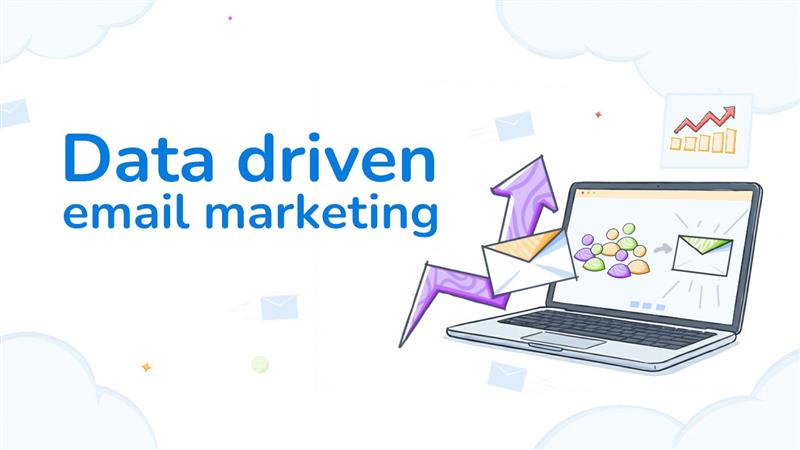
Data driven email marketing means every decision about who gets the email, when it lands, and what it says is backed by real subscriber behavior. Behaviors such as brands using segmentation see 760% more revenue, email personalization increases overall open rates, reported by marketers, personalized subject lines drive higher open rates, and triggered campaigns get 3x more engagement than generic blasts.
Email is the highest-ROI channel in digital marketing, delivering $36 for every $1 spent. But that return doesn’t come from sending more emails. It comes from sending smarter ones.
The inbox is crowded. The brands cutting through aren’t the loudest; they’re the ones listening to what their data is already telling them. This guide shows you exactly how to do the same.
Table of contents
- What is data driven email marketing?
- Why is data driven email marketing important?
- Data driven email marketing examples
- Data driven email marketing strategies
- FAQs
- Conclusion
What is data driven email marketing?
Data-driven email marketing is the practice of using real subscriber data, behavior, preferences, purchase history, and engagement patterns to guide every email decision you make.
Instead of sending the same message to everyone, you let the data tell you what to send, to whom, and when.
Why is data driven email marketing important?
Data driven marketing is another email marketing resource to get the quality leads that are both highly engaging for customer behaviors and practices. Because sending emails without data is just guessing, and guessing is expensive.
1Maximizes ROI
As mentioned before, email already delivers $36 for every $1 spent. Data-driven campaigns push that even further by targeting the right people with the right message at the right time. So, when data for email marketing is precisely provided by targeting the right people, you expect to get a genuine outcome from it.
2Drives real revenue
We know that segmenting and personalizing have a greater effect in email marketing. Segmented campaigns generate 760% more revenue than batch-and-blast emails. Personalized emails deliver 6x higher transaction rates.
3Improves engagement
Personalized subject lines boost open rates by 26%. Triggered emails get 3x more opens than generic sends. Through data-driven marketing, you can improve engagement with the best email subject lines, body copy, and engaging CTA to get more recipient interactions. That represents the data driven email marketing as a superior resource.
4Reduces unsubscribes
Irrelevant emails are the main reason people unsubscribe. Data ensures every email feels relevant by keeping your email list healthy and engaged. Presenting relevant data according to the user preferences in the email reduces unsubscribes.
5Builds customer loyalty
When subscribers feel understood, they trust you more. 91% of consumers are more likely to buy from brands that offer personalized experiences. Here, customer experience is enhanced, and they understand the business and want to negotiate further.
6Removes guesswork
Every decision, such as send time, subject line, content, and frequency, is backed by evidence, not instinct. Data driven email marketing decision provides more solid and powerful email marketing than you can get from guesswork.
In a crowded inbox, relevance wins. Data-driven email marketing doesn’t just improve your metrics, it turns email into your most powerful, scalable revenue channel.
Data driven email marketing examples
Many businesses use email marketing tactics to survive in the ecommerce business. Some established companies like Amazon, Nike, and Spotify use unique email sending techniques to bring out sales from their subscribers.
Here are some of the popular businesses and examples of data-driven email marketing that have been generating fine revenue for them over the years.
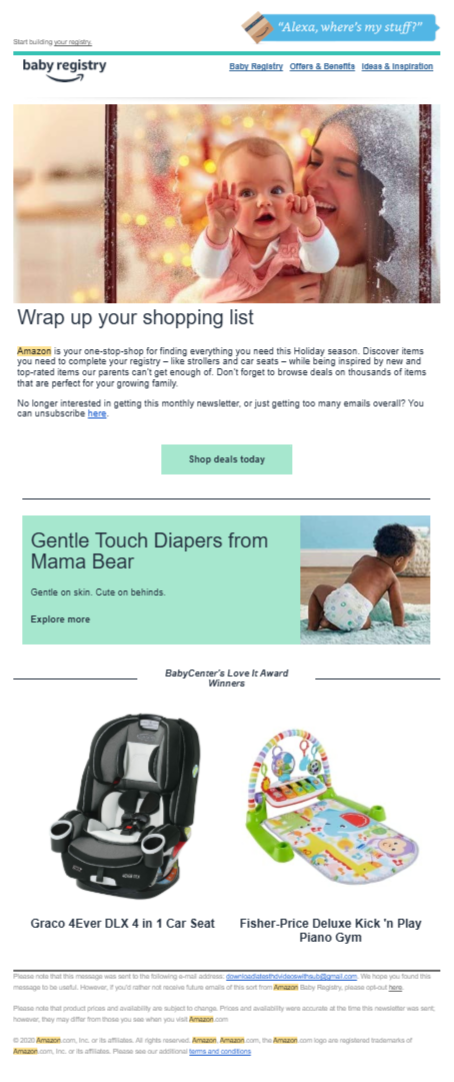
1Amazon — Product Recommendations
Amazon is one of the largest ecommerce businesses. Their unique way of sending product recommendations to subscribers catches attention. They use purchase and browsing history to suggest relevant products.
- Recommendation emails drive 35% of Amazon’s total revenue
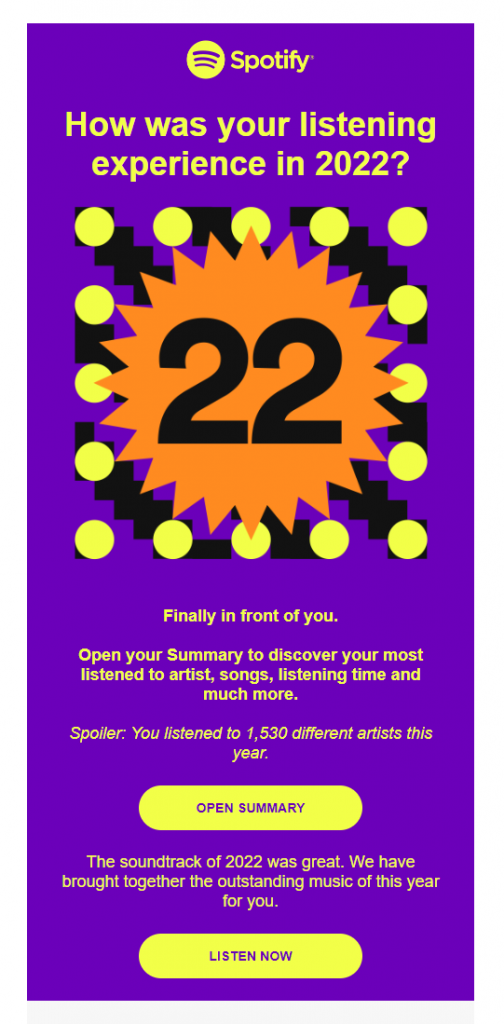
2Spotify — Wrapped Campaign
Spotify, a leading digital music sharing platform, sends each user a personalized year-in-review recommendation list based on listening data. See their data driven advertising example email below.
- Spotify generated billions of impressions organically through social sharing
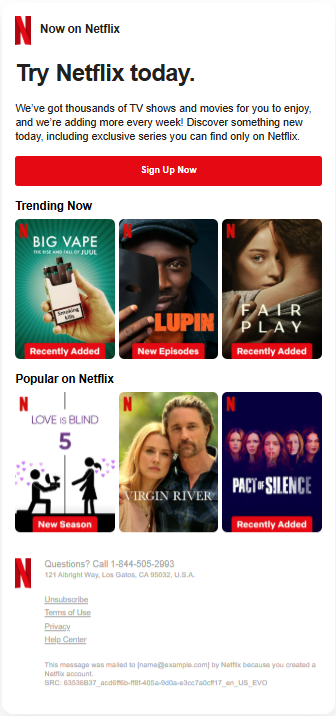
3Netflix — Because You Watched
Netflix, the subscription-based streaming service, sends emails based on triggers, including viewing behavior, to recommend new content.
- Personalization saves Netflix an estimated $1 billion per year in retention
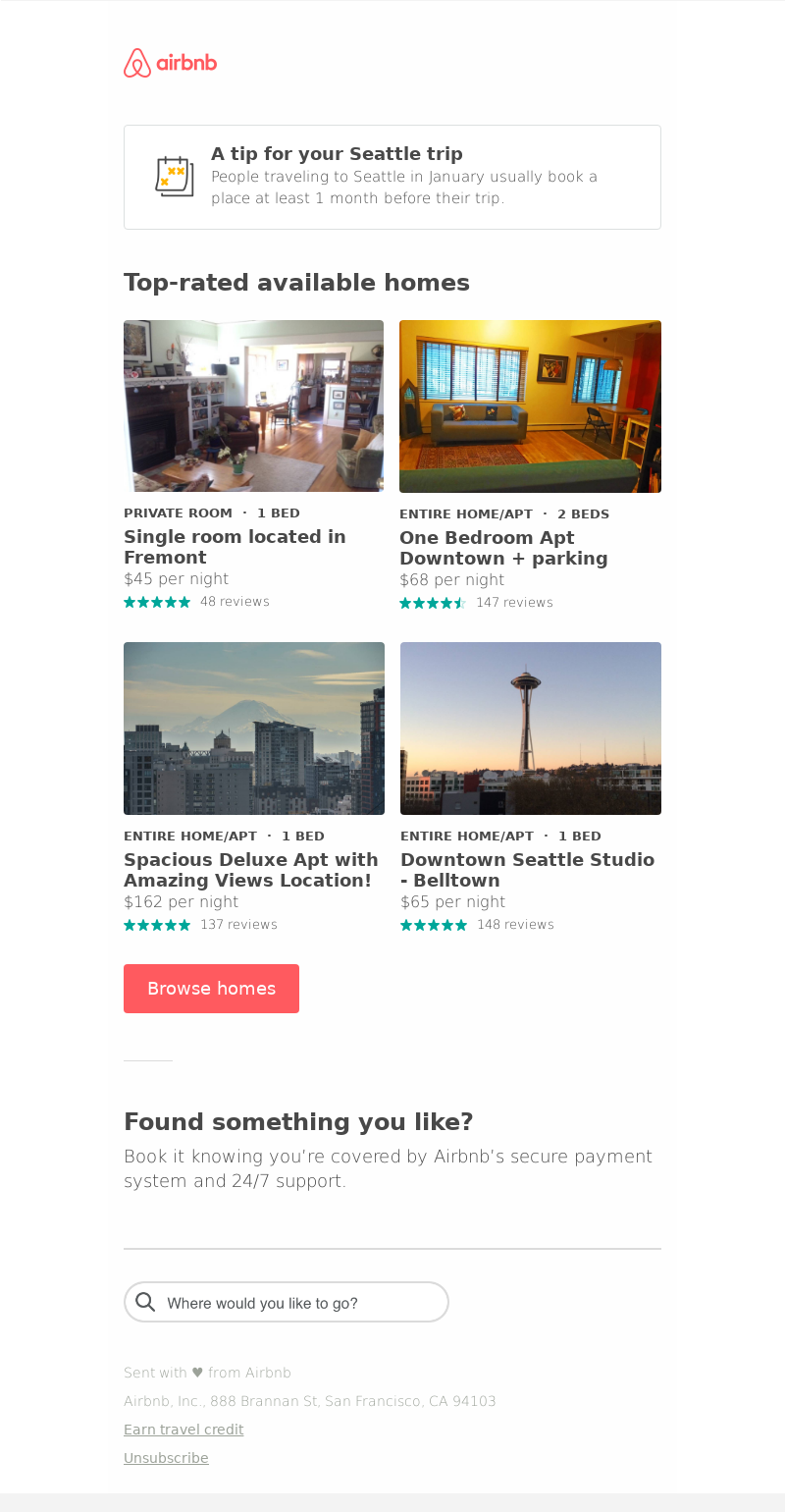
4Airbnb — Abandoned Search Emails
Airbnb sends follow-ups when users search but don’t book. Based on the user’s search preference, Airbnb sends abandoned search emails to its subscribers.
- Airbnb recovered millions in bookings through behavior-triggered campaigns
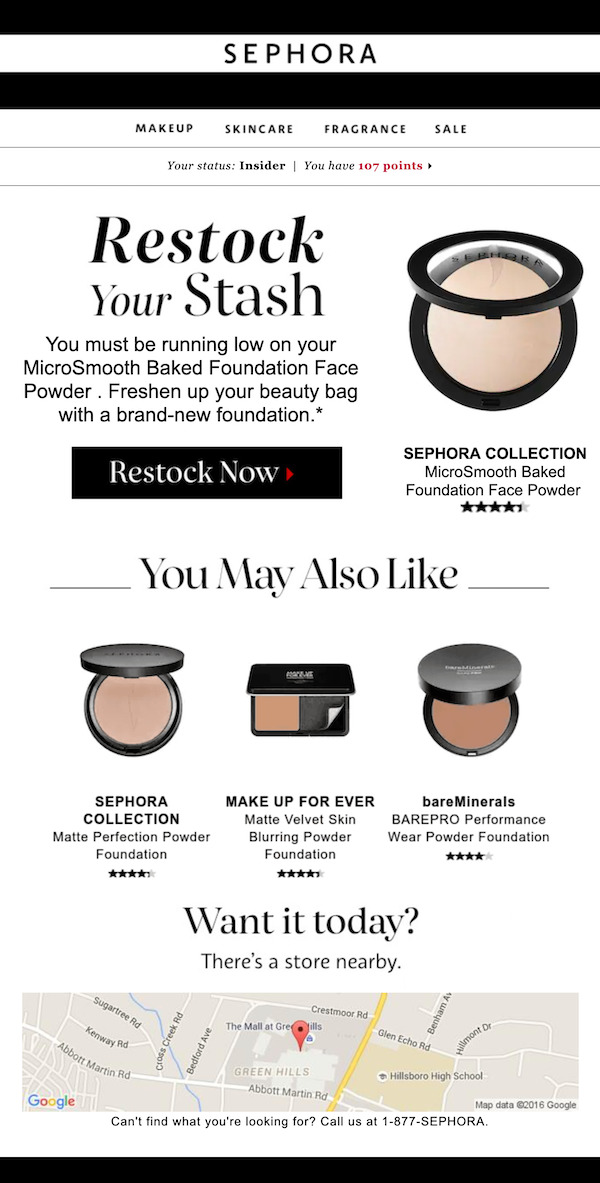
5Sephora — Loyalty & Replenishment Emails
Sephora, an online beauty retailer, uses purchase frequency data to remind customers when to restock. This way, customers get their preferred product stock update and also more product recommendations.
- Loyalty members spend 3x more than non-members
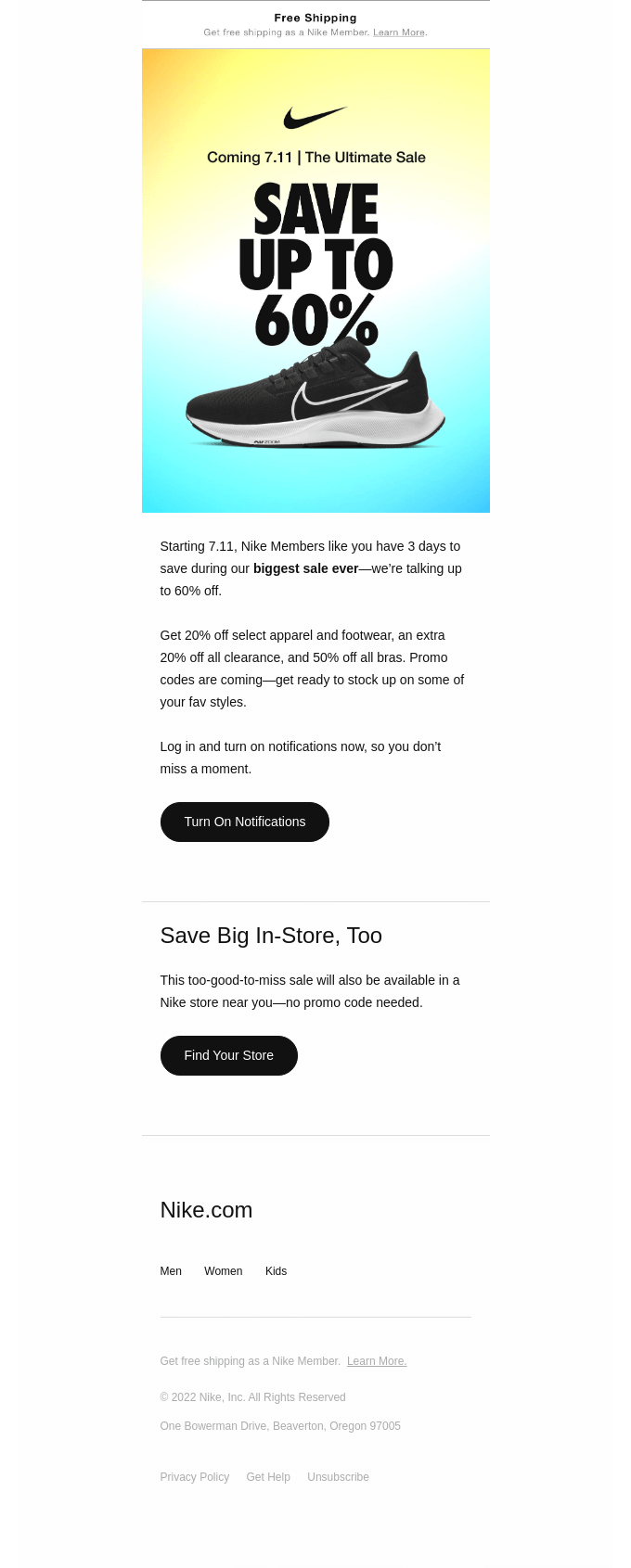
6Nike — Milestone & Activity Emails
Nike, an apparel and footwear design business, sends their users triggered emails based on workout data from the Nike Run Club app.
- Deepens brand loyalty through hyper-personalized engagement
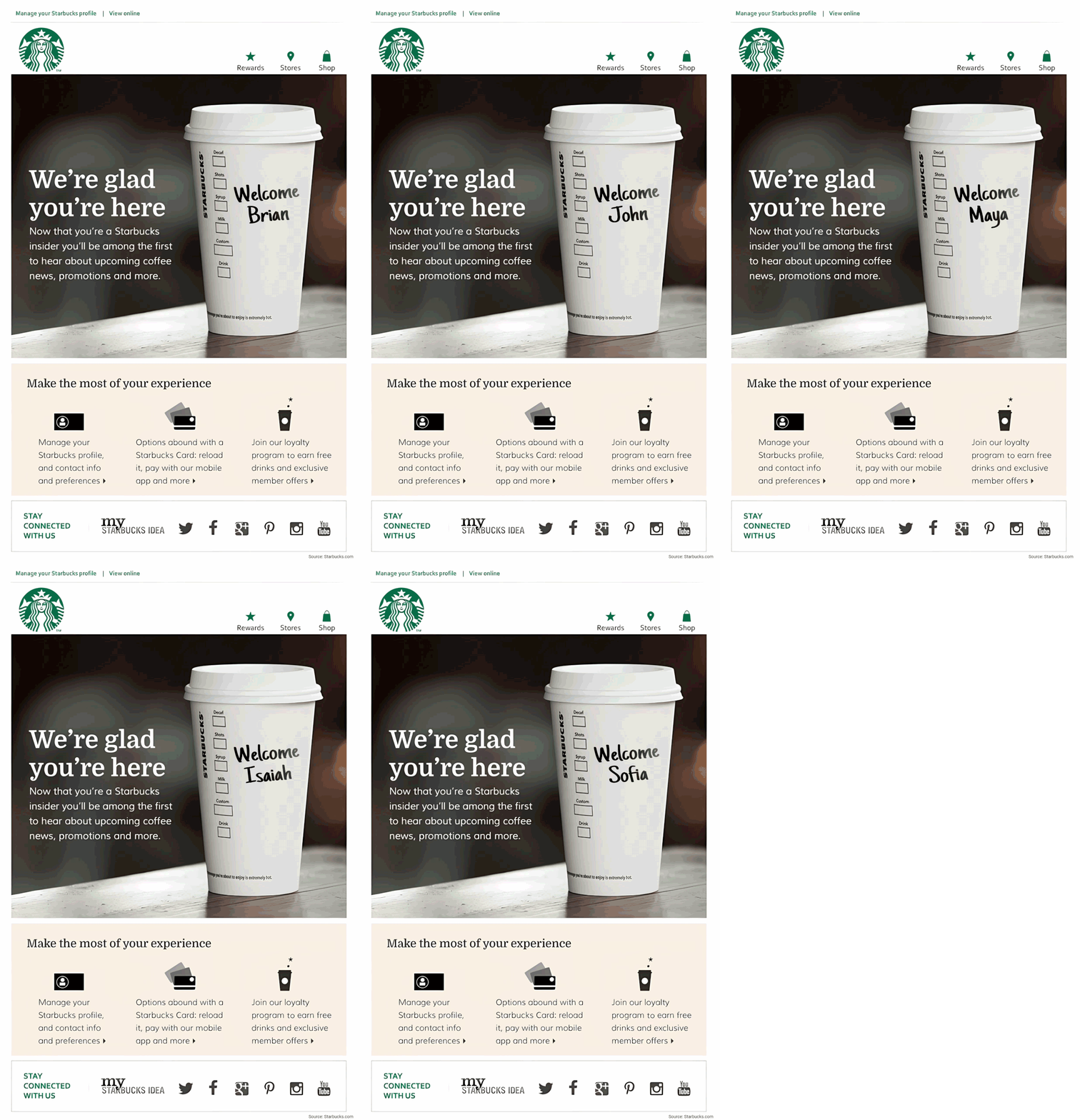
7Starbucks — Rewards Personalization
Starbucks, a retail coffee and roaster brand, sends individualized offers based on order history and visit frequency.
- Their personalized offers drive 3x higher redemption rates than generic promos
Data driven email marketing strategies to boost email performance
Do you want to drive email marketing to the next level?
You can implement data driven email marketing to your existing strategy to create more impact and form customers driven marketing strategy to the email marketing.
Here’s the guide you can follow to implement data driven email marketing strategy.
1Define Your Goals
Set clear, measurable targets before anything else. Without a goal, you can’t measure success or know what data actually matters. A goal-oriented email marketing task is always a plus to speed up your current project within the shortest time.
2Collect the Right Data
Gather behavioral, demographic, engagement, and transactional data. The quality of your strategy depends entirely on the quality of your data. More quality defined work, more precise data you expect to get in hand.
3Segment Your List
Divide your audience by behavior, lifecycle stage, or purchase history. Segmented campaigns drive 760% more revenue than sending one message to everyone. Segmentation email marketing is a fruitful process to provide users with comfort and give their preferences priority.
4Automate Triggered Campaigns
Set up emails that send automatically based on subscriber actions, such as abandoned carts, purchases, or inactivity. Triggered emails get 4x more opens than manual sends.
5Personalize Every Email
Personalization is always a prior idea when you step into email marketing. Tailor content, offers, and subject lines to each segment. Personalization goes beyond first names; it’s about sending what each subscriber actually wants.
6A/B Test Consistently
A/B testing makes you relevant to connect with the audience even more authentically and provides a structured idea of email marketing. Test one variable at a time, subject lines, CTAs, and send times. Every test gives you data that makes the next campaign smarter.
7Track the Right Metrics
Tracking the right metrics is recommended to drive the next email marketing campaign with a successful strategy. Monitor open rates, click-throughs, conversions, and revenue per email. Vanity metrics look good, but the right metrics drive decisions.
8Optimize & Repeat
Send one campaign and find out the delivery and open rate, with exactly how many people have opened the campaign. In a word, use every campaign’s performance to improve the next one. Data-driven marketing approach is a loop, not a one-time setup.
9 Social media
Use social media to monitor users and their activity. Engagement is the main factor here. See their review and collect leads to start data-driven marketing. Many use data-driven Facebook marketing to collect leads, also other social media such as X, Instagram,
At the end, Collect → Segment → Automate → Personalize → Test → Optimize. Repeat every cycle, and your email program compounds in value over time.
Conclusion
Data-driven email marketing isn’t optional anymore; it’s the difference between an inbox that converts and one that gets ignored.
The brands winning aren’t sending more emails. They’re sending smarter ones, such as personalized, triggered, and backed by real data, also using a smart and effective email marketing platform. With a $36 ROI for every $1 spent and 760% more revenue from segmented campaigns, the results are impossible to argue with.
Your subscribers are already telling you what they want through every click, open, and purchase. All you have to do is listen and let the data lead the way.
FAQs
Yes, email is a digital data under the protection of GDPR and CCPA, which are email compliance regulations. Also, it contains content and metadata.
Yes — email marketing is one of the most powerful forms of digital marketing. It’s a direct, owned channel that delivers $36 ROI for every $1 spent, making it the highest-returning channel in the entire digital marketing mix ahead of SEO, social media, and paid ads
This kind of data includes customer engagement with marketing channels, demographics, purchase history, browsing behavior, and more.
Send when you have something valuable to say, not just to fill a schedule. Watch your unsubscribe rate; if it’s climbing, you’re sending too much. Watch your open rate; if it’s dropping, you’re sending too often or not relevantly enough. Quality over quantity, always.
 Contents